Why R&D Credits Should Be Built to Defend, Not Just Claim
R&D credits are a high-scrutiny area for the IRS. Learn what the IRS expects and how to prepare an audit-ready R&D credit.

Mark Stapleton | Director of Quality Control, SPRX
Jun 30, 2025

Claiming an R&D tax credit does not automatically trigger an IRS exam.
But treating an exam as unlikely is the most common and costly mistake taxpayers make.
For more than 30 years, the IRS has viewed the R&D credit as a high-risk area. The credit involves judgment, documentation, and often material dollar amounts. As a result, the IRS does not treat R&D credits as routine. It treats them as suspect until proven otherwise.
Why R&D Credits Draw IRS Scrutiny
The IRS has been explicit about its focus on the R&D credit. Specialized audit teams review these claims. Internal guidance instructs agents to approach them with skepticism. Significant enforcement resources are devoted to R&D credit examinations each year.
Returns may be selected for exam in many ways. Computer scoring systems flag returns that appear likely to produce adjustments. Targeted compliance initiatives focus on specific industries or transaction types. Large taxpayers are often examined as a matter of course.
You will never know which path applies to your return. What you can know is what the IRS will expect if an exam occurs.
What the IRS Expects in an R&D Credit Exam
When examining an R&D credit, the IRS looks for the same core elements every time:
A complete list of research projects
Qualified research expenses tied directly to each project
Documentation demonstrating how each project satisfies the qualification tests
This is not theoretical guidance. It is the roadmap the IRS has published and reinforced for years.
Many taxpayers are unprepared for this level of detail. Spreadsheets, estimates, and interviews conducted months or years after the work was performed often become the foundation of the credit. Others defer documentation entirely and wait to prepare only if an exam occurs.
This approach shifts preparation into the worst possible moment.
Preparation Changes the Economics of an Exam
Preparing during an IRS exam is reactive, disruptive, and expensive. Timelines are compressed. Internal resources are diverted. Narrative control moves to the examiner.
Preparing in advance is different. Costs are predictable. Documentation is assembled deliberately. Facts lead the discussion, not assumptions.
One approach is a gamble. The other is a strategy.
Preparing with SPRX
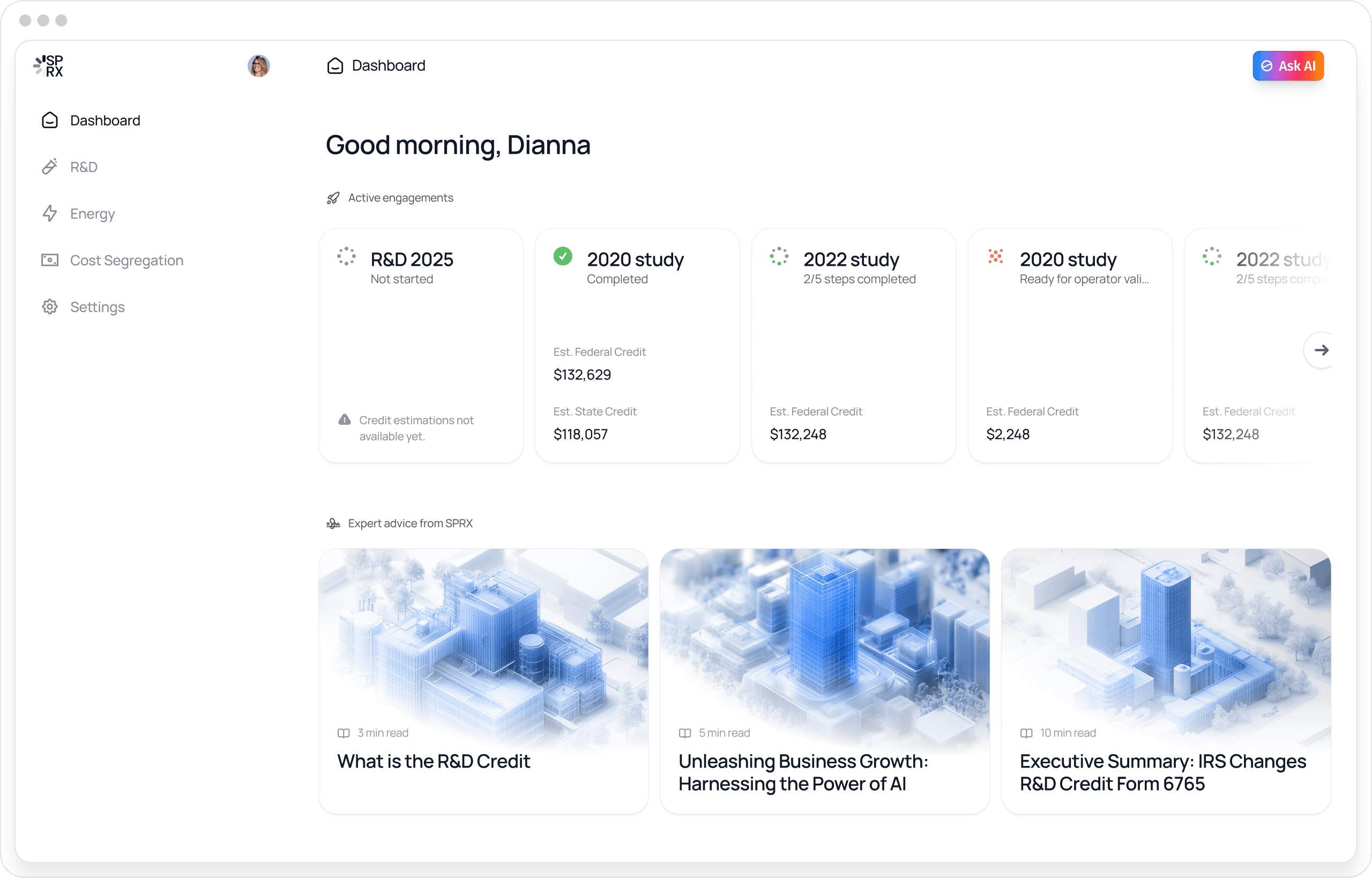
SPRX is built around how the IRS actually examines R&D credits. Our platform analyzes research documentation at scale and produces project-level support, cost traceability, and exam-ready reports aligned with IRS expectations.
In weeks, not months, clients receive a complete, defensible R&D credit file and the confidence that comes with it.
R&D credit exams are not rare events. They are foreseeable outcomes. The only real decision is whether you prepare before the exam or gamble during it.